Introduction
Padel and tennis are two vibrant racquet sports that have captured the hearts of players and fans alike. While they share core elements, such as the objective of scoring points and using a racquet to send balls over a net, each sport has unique characteristics that set them apart. This detailed exploration of padel vs tennis covers everything from the rules, court dimensions, equipment required, strategies involved, to their rising global popularity. Whether you’re a curious newcomer or a seasoned player, understanding these differences will enhance your appreciation of both sports.
Court Dimensions
One of the most fundamental differences between padel and tennis lies in their court sizes and layouts. A standard tennis court is significantly larger. For singles matches, it measures 23.77 meters long and 8.23 meters wide. When it comes to doubles matches, the width expands to 10.97 meters. In contrast, a padel court, compactly designed for efficient gameplay, measures 20 meters in length and 10 meters in width.
The net in both sports sits at a height of 0.914 meters in the center. However, a defining feature of padel courts is the surrounding walls—made of glass or mesh fencing—used in active gameplay. This means that players can utilize these walls for rebounds, creating a unique dynamic not present in tennis. The walls can extend the rally length and allow for strategic plays that involve predicting the ball's trajectory post-rebound.
Another aspect to consider is the surface material. Tennis courts typically range from clay, grass, to hard surfaces, influencing the speed and type of ball bounce, while padel courts are often constructed from artificial turf or concrete tailored for foot traction and ball control. The smaller, enclosed nature of a padel court emphasizes quick reflexes and short, powerful strokes, contrasting with the expansive movements required on a tennis court.
Equipment Used
The equipment for padel and tennis varies significantly, impacting how each sport is played. In tennis, players use long-handled racquets made from various materials, primarily graphite or aluminum, which ensure power and control for strong serves and baseline rallies. The tennis ball itself has a rubber core encased in felt, affecting its bounce and flight. A standard tennis ball measures between 6.54 cm and 6.86 cm in diameter and is designed to travel long distances at high speeds.
Padel equipment, however, opts for a more compact design. The padel racket is shorter and solid, featuring a flat surface with multiple perforations. This configuration changes the way players hit the ball, focusing on placement and spin rather than sheer power. Padel rackets are typically made from a composite material which balances weight and durability. The padel ball, smaller than a tennis ball, is also less bouncy, designed particularly for the enclosed game space.
For players transitioning between the two sports, these equipment distinctions require adjustments not just in physical handling, but also in technique. For example, while a powerful serve is crucial in tennis, padel serves are executed underhand, introducing a tactical element that can catch opponents off-guard. Knowing these details about the equipment helps players strategize more effectively and refine their skills to fit the specific demands of each sport.
Rules and Scoring
Rules play a crucial role in differentiating padel from tennis. In tennis, the game progresses in discrete points, games, and sets. Points in tennis are scored using terminology like love (0), 15, 30, 40, and game point, with players needing to win at least six games by a two-game advantage to claim a set. Matches can be played in various formats, such as best of five or three sets, notably in professional tournaments.
Padel, while sharing similar terminology for scoring, introduces the unique aspect of the walls into its rules. A player can hit the ball against the wall during play, allowing them to continue their rally and enabling creative shot placements. Each match is commonly played as matches of best of three sets, with the tiebreaker rules closely following those familiar to tennis.
Another noteworthy distinction is in the serve. In padel, players must serve underhand from behind the service line, introducing a different rhythm and approach to starting points. The ball must bounce once on the ground before being hit and must then clear the net and land within the designated service box. The tactical use of serve can surprise opponents and typically leads to faster exchanges, adding a layer of complexity to padel matches.
Gameplay Strategy
Both padel and tennis involve strategies that reflect their respective playing styles and court designs. Tennis, with its larger court, often emphasizes powerful serves and strategic baseline game play. Players are frequently engaged in long rallies that require stamina and skillful shot-making to break through an opponent’s defense. Often, the focus is on winning points through powerful groundstrokes or clever drop shots to catch opponents off-guard.
In contrast, padel emphasizes a collaborative and dynamic approach, especially when played in doubles. Players are often quick to the net, utilizing the shorter court space for fast exchanges. Collaborating with a partner becomes critical; effective communication and strategy can help dominate the game. The walls significantly change gameplay dynamics, allowing players to execute rebound shots strategically. Mastering wall shots can be a game-changer, giving players an edge in outmaneuvering their opponents.
Additionally, padel requires heightened reflexes due to the proximity of players and the rapid pace of rallies. Where tennis requires footwork and long-distance running, padel emphasizes agility and the ability to make quick adjustments based on the ball’s trajectory after rebounding off walls. Players new to either sport should take time to learn and adapt their strategies to the playgrounds uniquely posed by each sport.
Player Skills
The skill sets required for padel and tennis reflect their play styles and the physical demands of each game. Tennis players often need advanced physical fitness and agility, with matches requiring both endurance and explosive power for serves and groundstrokes. Speed and strategic positioning allow players to cover the larger court more effectively, making footwork a crucial component of their skill set.
For padel players, technical skills tend to take precedence over raw physicality. While fitness remains essential, the sport demands precision shot-making, quick decision-making, and an understanding of wall dynamics. Padel encourages players to refine their techniques—such as executing effective volleys or clever use of angles—to maintain control during rallies. The emphasis on quick reflexes and adaptability characterizes successful padel players.
This dynamic creates varied training routines for players focusing on either sport. Tennis players might engage in endurance training on larger court runs, while padel players focus on agility drills and shot placement exercises. Additionally, beginners in either sport might benefit from coaching to master their respective techniques and gain a comprehensive understanding of the unique skills required for each game.
Global Popularity
As we examine padel vs tennis, it's intriguing to consider their popularity across different regions. Tennis, with its rich history, boasts professional tournaments like Wimbledon, Roland Garros, and the US Open, showcasing global talent and attracting millions of viewers. These prestigious events further entrench tennis as one of the most recognized sports worldwide, fostering a dedicated fan base.
Padel, however, is currently experiencing a rapid rise in popularity, particularly in Europe and Latin America. Countries like Spain and Argentina are leading the way, boasting a myriad of professional leagues and highly attended tournaments. Spain, in particular, has seen a padel boom, with numerous clubs opening and players flocking to the sport at all skill levels.
The social nature of padel—often played in doubles—also contributes to its appeal. It’s seen as more accessible for recreational play, attracting novices who appreciate the sport's emphasis on social interaction and fun over intense competition. In Asia, including Malaysia, padel courts are emerging, reflecting the sport's growth potential in new markets. This indicates a promising horizon for both sports, as they continue to evolve and attract new players globally.
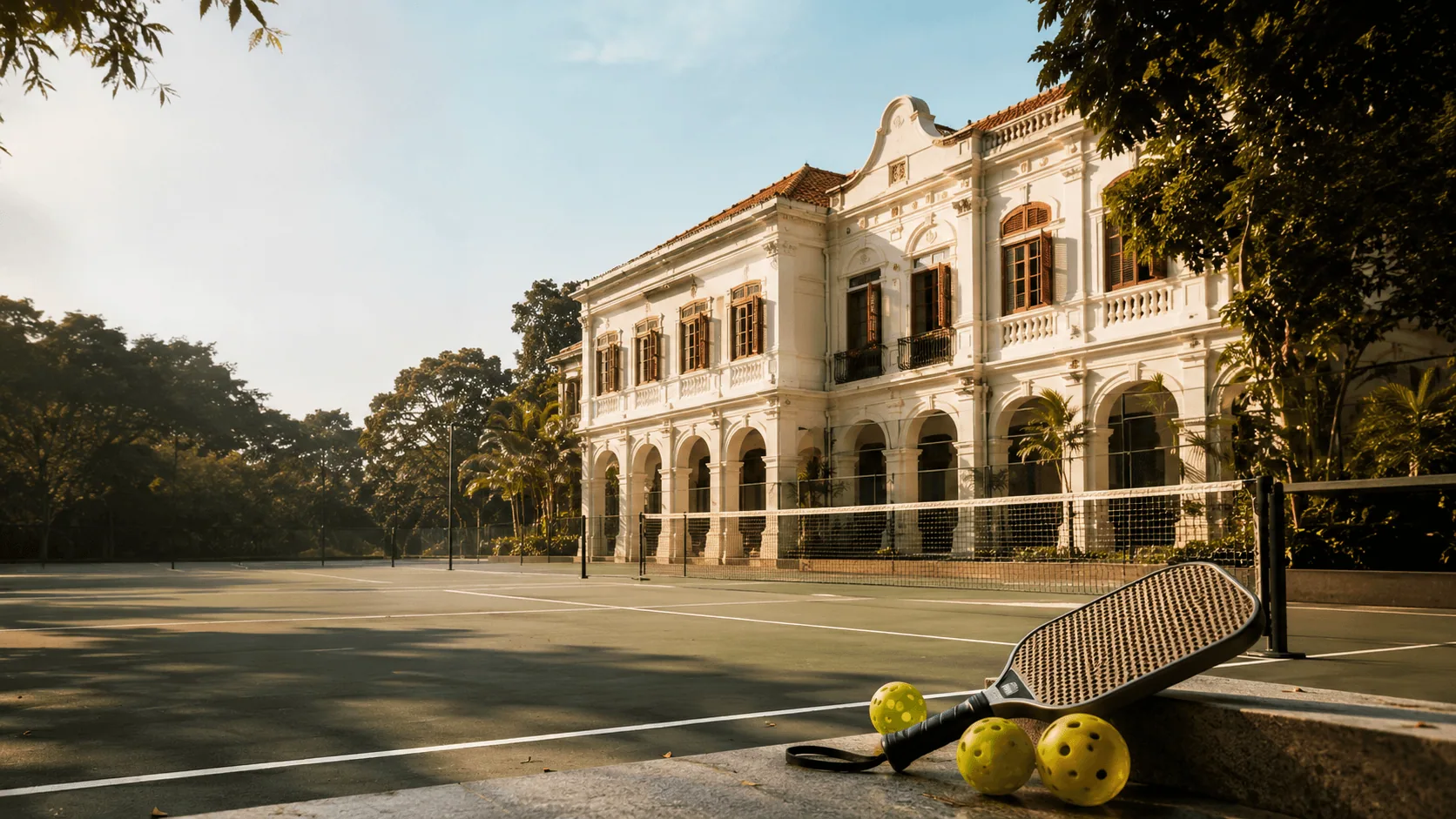
Ready to play at Heritage Courts?
Book a pickleball or padel court in George Town, or explore our academy programmes.