Introduction
Racket sports have gained immense popularity across the globe, and two of the most talked-about games are padel and pickleball. Both sports offer exciting experiences and serve as excellent ways to maintain fitness while having fun. In the vibrant landscape of sports, these games, while sharing similarities, also exhibit distinct characteristics. This article delves into the differences and unique aspects of padel vs pickleball, helping you make an informed choice on which game to try.
What is Padel?
Padel has its roots in Mexico, dating back to the 1960s. It gained traction notably in Spain and other Latin American countries and has exploded in popularity in recent years. It is typically played in doubles format on an enclosed court that is roughly half the size of a traditional tennis court and surrounded by glass walls. The game utilizes solid, stringless rackets and a ball that resembles a tennis ball but has a slightly lower bounce, tailored to the dynamics of the court.
Players in padel rally with finesse and strategy rather than relying solely on power. In addition to standard shot-making techniques, players can take advantage of the walls to execute complex plays. This aspect gives padel a unique flair, as players can integrate elaborate strategies and deceptive shots to outmaneuver their opponents.
The game encourages participation from individuals of various skill levels. Due to its emphasis on teamwork and tactics, newcomers can quickly pick up the basics, while more experienced players continuously find ways to refine their techniques. Many clubs feature padel courts, creating a lively social atmosphere where players can interact and share their passion for the sport.
What is Pickleball?
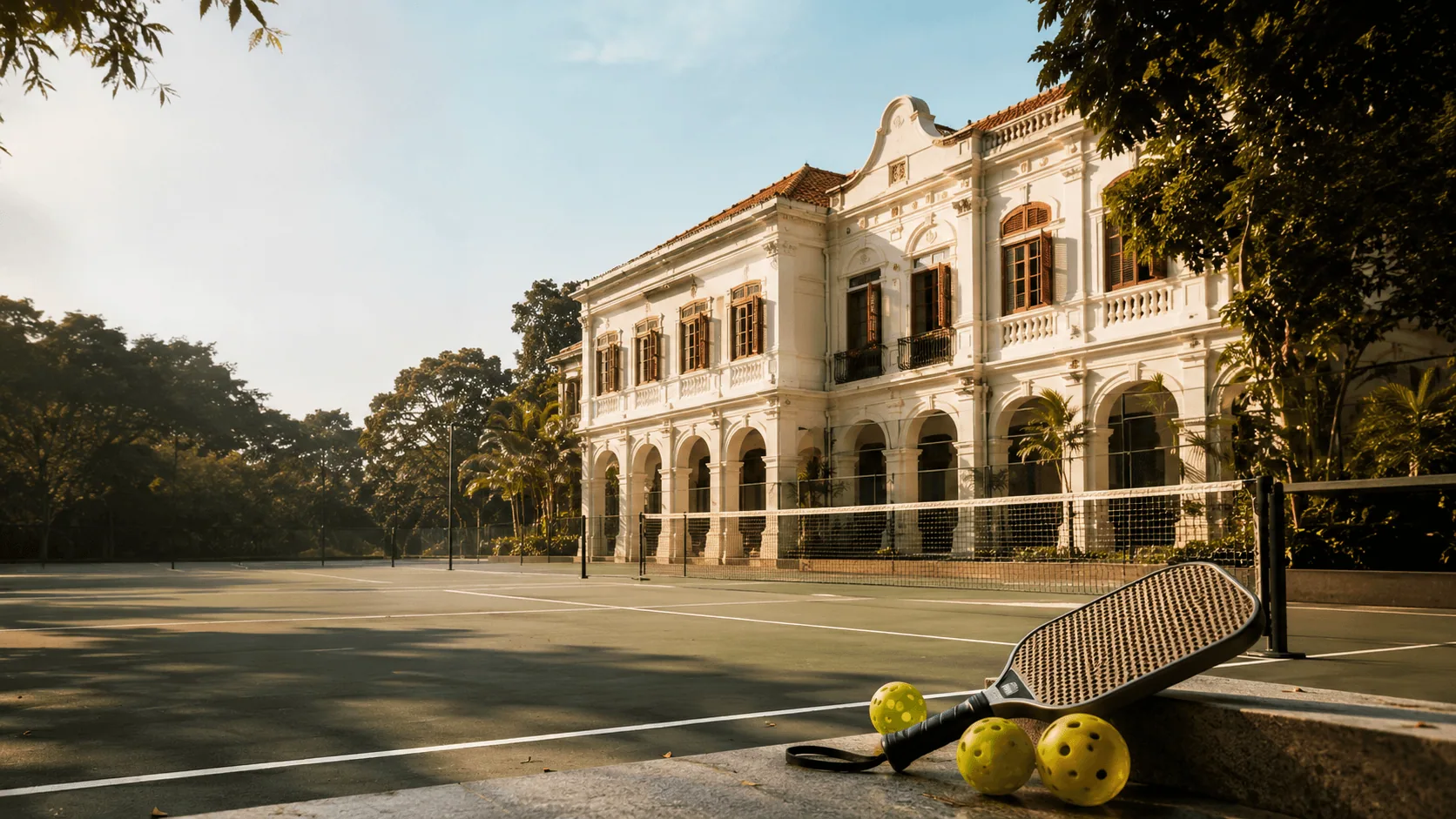
Originating in the United States in the 1960s, pickleball combines elements from several racket sports, particularly tennis, badminton, and table tennis. Although it started as a backyard pastime, pickleball has grown into a serious competitive sport with its own leagues and tournaments. The court dimensions are similar to those used in badminton, but the net is slightly lower, making it more accessible for players of all ages.
Players use paddles made from lightweight materials, and a perforated plastic ball designed specifically for the sport allows for unique play characteristics. Pickleball can be enjoyed in both singles and doubles formats, making it highly versatile, whether you're looking for a competitive match or a fun game with friends. One of the key components of pickleball is the non-volley zone, also known as the kitchen, which keeps the game balanced and encourages thoughtful shot selection.
The game's rapid rise in popularity can be attributed to its inclusivity and social aspects. Adult and youth leagues are forming in many communities, bringing together players from various backgrounds. Additionally, its low-impact nature makes it an appealing choice for those seeking enjoyable ways to stay active without the physical stress associated with some other sports.
Rules of Padel
The rules of padel offer a blend of familiarity for those who have played tennis while introducing unique gameplay elements. A standard match typically lasts around 50 minutes to an hour, and games are generally played in a best-of-three sets format. The scoring system closely mirrors tennis, which includes points, games, and sets. Let’s explore some essential rules:
- Scoring: Matches are scored in a similar fashion to tennis, with a game needing to reach four points to win, requiring at least a two-point lead.
- Serving: Players serve underhand from behind the baseline, and the ball must bounce once on their side before crossing the net into the opponent's service box. The serve crosses the net diagonally to the opposite service box.
- Wall Play: After the serve, players may use the walls to rebound the ball, leading to more intricate and strategic play. Players can hit the ball after it bounces off a wall, which opens up various shot possibilities.
- Faults: A let serve is considered valid if it hits the net and goes over; however, if it fails to land in the correct service area, it results in a fault and leads to a second serve opportunity. Players must also avoid hitting the ball before it bounces (unless returning a volley).
- Out of Bounds: The ball is considered out of bounds if it bounces outside the boundaries of the court, whether on the initial shot or after using the walls.
Rules of Pickleball
Pickleball maintains its own set of clear and concise rules that emphasize fun and fairness. As with padel, matches can be played in either singles or doubles, with the scoring system allowing for games played to 11, 15, or even 21 points. Players must win by at least two points. Notable rules in pickleball include:
- Serving: Serves are made diagonally across the court and must clear the non-volley zone (the kitchen) to be considered valid. The server must perform an underhand serve and make contact below the waist.
- Non-Volley Zone: Players must let the ball bounce once on both sides of the net before they can volley. Stepping into the non-volley zone while volleying results in a fault.
- Faults: Common faults occur when a player serves the ball into the net, hits it out of bounds, or violates the non-volley zone rule. Players must understand these regulations to enjoy the game effectively.
- Scoring Points: Only the serving team can score points. If the serving team wins the rally, they earn a point and continue serving. If they lose the rally, the opposing team serves next.
- Double Bounce Rule: After the serve, both teams must allow the ball to bounce before playing it in a volley, making for engaging rallies.
Equipment Comparison
When it comes to equipment, both padel and pickleball have distinct requirements that cater to their respective gameplay styles. In padel, players utilize solid stringless rackets that are smaller than traditional tennis rackets. These padel rackets offer a variety of shapes, weights, and materials, which can impact how players control their shots. The ball used in padel is similar to a tennis ball but is typically less bouncy, adapted for the enclosed court environment.
Footwear is essential in both sports. Padel players benefit from shoes designed for quick lateral movements, providing grip and support while navigating the smaller court. Players often prefer shoes specifically made for padel or tennis as they offer the necessary traction.
On the flip side, pickleball paddles are lightweight and available in varying sizes and materials, such as wood or composite. The perforated plastic ball used in pickleball has a unique design with holes, allowing it to glide through the air in specific ways, adding elements of finesse to play.
Just like in padel, footwear in pickleball is crucial for performance. While tennis shoes work well, specialized pickleball shoes offer added support, stability, and grip for quick movements.
Playing Environment
The playing environment significantly influences the experience for both padel and pickleball enthusiasts. Padel courts are enclosed with glass walls that allow players to continue rallies even when the ball rebounds off the walls. This not only makes for exciting play but also means games can be enjoyed throughout the year, rain or shine. Padel courts are often found in dedicated sports clubs or recreational centers, promoting a vibrant community atmosphere where players can socialize and engage in post-match discussions.
Conversely, pickleball courts can be found in various community settings, such as parks and gyms, providing versatility for play. The arrangement of indoor and outdoor courts caters to players across different climates. Playing outdoors allows for fresh air and a pleasant environment, while indoor facilities protect players from harsh weather conditions.
The accessibility of pickleball courts fosters engagement in neighborhoods, encouraging family participation and community events. Players can enjoy both casual matches and competitive games, with many clubs hosting regular tournaments. In contrast, padel’s more structured court setup might instigate formal competitions among dedicated clubs, enhancing players' skills and promoting camaraderie.
Which Sport to Choose?
Choosing between padel and pickleball ultimately depends on your interests, fitness levels, and your social needs. If you enjoy an energetic, tactical game that incorporates agility and strategy, padel may be the ideal choice. The small court, combined with the necessity for good teamwork, makes it an exciting choice for doubles play, where communication and coordination become paramount.
Padel's community feel, enriched by booming sport clubs in many regions, offers a social element that young and old alike can appreciate. Furthermore, if you are someone who appreciates nuanced plays and wall strategies, padel will provide thrilling experiences.
On the other hand, if your preference leans toward a game that is easy to learn with a relaxed atmosphere, pickleball stands out. Its focus on inclusivity allows friends and family members of all ages to participate actively. Pickleball’s unique non-volley zone encourages a friendly, even pacing of play, making for enjoyable rallies without the constant rush often seen in more intense sports.
The bottom line is that both sports offer unique benefits and cater to different audiences. Testing the waters with a session or tournament of each could serve as the ultimate way to determine which racket sport aligns with your lifestyle and brings you the most joy.
Ready to play at Heritage Courts?
Book a pickleball or padel court in George Town, or explore our academy programmes.